 EAA Chapter 430
VFR?
Open the PDF at page 1 See the whole August 2018 issue
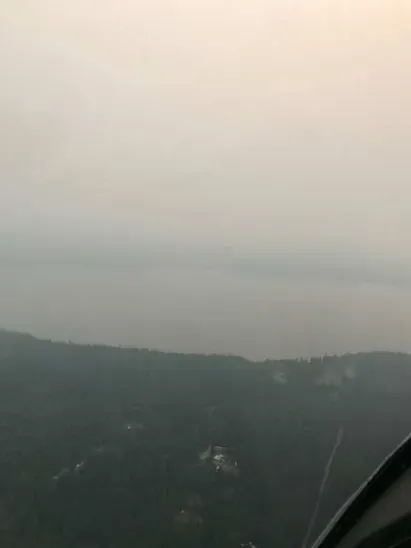
Boy has it been smokey the last two weeks. I was up in Alaska and heard one of my friends say it smokey down here. I had no idea the extent of the smoke.
Many pilots look up at the sky and hear an airplane go over head and can’t see it. Or can barely make it out in the smokey haze. Do you know what FU means on the METAR report? What 2 ½ miles really looks like inflight?
Well, I got back from Alaska. I had a flight back to W28 that afternoon and the first thing I did was to fill the airplane. If I took off I wanted fuel to be my last thought for a 30 plus minute flight back to W28.
Now understand I have been flying IFR most of my flying career. I have over 28K hours of flying. When you get airborne in marginal weather you must have an out. If in this case the smoke gets so bad you have to go IFR more less you had better know what you’re doing. I like to stay in view of the ground and other references. Like buildings on the coast line, boats on the water, etc. I don’t like crossing open water when its marginal visibility and the altitude has to be so low there isn’t an out.
So, there you are flying along and the weather visibility gets so bad you have to turn around. You are on the shore line…which way are you going to turn? Out over the water? Toward the coast? If you think you can maintain level flight and NOT lose 10 feet of Altitude in a 30-degree bank at 100feet AGL, go ahead but I bet you can’t. The accepted way to turn is toward the shore. This type of turn will give you many visual references. References that you have been taking for granted all your flying life. Turn out over the water and all those references go away. The smoky ski meets the water and it’s the same color. The view out the front window, the side window, etc. is now really limited. Now your view is 2-3 miles and mostly at an angle: “slant Vis”. No mountains to look at. The shore progressively comes into view SLOWLY. You don’t get to see any references. Until they are on you. Just like at night. Do that at night and you are not going to last on this side of life very long.
Don’t forget about the possibility of another plane coming the opposite direction at the same altitude. You better make sure all your lights are on. Oh, and if you’re doing this over land remember the towers. They have guy wires!
Well, I filled the plane up. Checked the weather along my route, looking at the web cams at all the airports along the way, then determining that the weather along my flight path was better the further North I went. I launched. I had a plan to go up the shoreline, not crossing Puget Sound on a direct route to W28. I had also watched airliners departing from SeaTac and noticed the altitude they disappeared at.
Now after listening to the ATIS at Boeing the weather had gone IFR. What is IFR? Any portion of the ATIS in this case below VFR minimums. It was 2 ½ mile vis and clear. Ha, what a weather report!
What can you do to get out of an IFR airport? You can get a “Special VFR” departure. The hard part of getting out are the IFR arrivals and departures. You have to get the Special and get in line for departure. If you have to come back you have to get a special also. You may not be allowed in for some time and be asked to hold outside the zone. Or you are number three inline on the special request. You better have lots of fuel. The IFR guys get priority.
I was lucky, I know the system, and have done hundreds of “Specials” I asked the tower when I got my “Special” if there were a lot of Inbounds. They said “Nope. You’re number one.” Cool!!! I did my run-up. Completed the checklist and blasted off. As I expected the smoke was pretty bad but the air was dead smooth. Inflight visibility was about 2 miles up and down along the route. I was looking out for other traffic, and lo and behold there’s a Turbine Otter coming at me. No lights on. I proceeded up the coast, I got the ATIS for Paine Field and then contacted Tower and got permission thru there area. I then crossed over the short span of water at 1700 FEET MSL. No problem at that altitude I can glide to either side from half way to Whidbey Island or Paine Field area.
So, I made it back to W28 only took a few more minutes than normal direct.
For you new pilots, you’d better not do this. You just plain ol don’t have the experience to keep the plane level and think about your next five moves at the same time. Seen it tried and it’s never come out good. GET IT!?
I had breakfast with a couple at a Lodge in the Brook Range, AK one morning. They proceeded to go out and hit a mountain at full speed. There were already several accidents in the Brooks Range that week. Bad weather all…sheep hunting season had begun.
Things to study…
-
Special VFR requirements? When it comes into play. Things the Approach Control or tower will tell you to do. What’s it all mean? You better have a pen ready to copy the clearance. It will come fast.
-
Inflight VFR requirements? What are they for Day and Night Flying?
-
What are the fuel requirements for departure and arrival day and night?
-
FAR requirements of a water crossing altitude in a single engine airplane. (Big One around here)
Please make sure you have the dates marked on your calendar to attend the first VMC Club meeting in Sept. It is September 12 at 7pm @ Mariners Café. Be there! Tell other pilots. If nothing else you will get to do some great hangar flying!
Ray Ballantyne can answer your questions about Special VFR he was Tower Chief at the busiest float plane base in the World; a unique experience. As an example: when I went up to Alaska last week, we went to Lake Hood and watched float planes coming in for an hour one right after the other non-stop. Beavers, Otters, Cubs, Sedans, Maule’s, !85’s, 180’s, 206’s. Landing long, short, step turns, etc.
See ya at Air Affaire this upcoming weekend. August 25. Hey about the Air Affaire? I have been asking to have a flour bombing contest.
That’s where we fly with a passenger and throw out a bag of flour at an outhouse. The closest team wins. There are some rules but not many. Just be safe and no one goes below 100 feet and no diving at the outhouse from high up. No taking doors off either. Some airplanes are not allowed door removal. If you’re wondering why, it because someone tried it already and almost crashed. There is a charge of 5 bucks and a prize at the end. Money should be donated. Any suggestions on that are accepted!
Mike Radford President, EAA chapter 430