 EAA Chapter 430
Winter Weather Is on the Way
Open the PDF at page 1 See the whole October 2018 issue
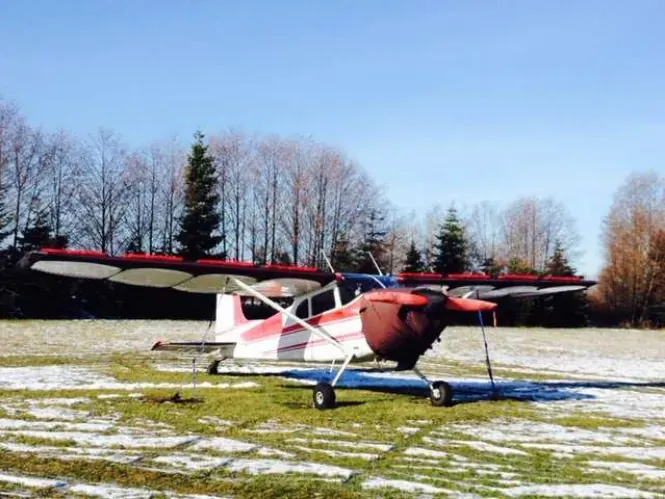
Gosh I have been up early and for the past week and the early morning temps have been in the low to mid 30’s. When I was in Anchorage we started thinking about how we were going to preheat the aircraft engines this time of year. It was always a debate. There are many ways to preheat. The commercial guys had the availability of electricity. All pilots heated their plane’s engines. Up in Fairbanks they heated the cockpits too. Why heat the cockpit? I’ll get to that later.
The main reason to pre-heat the aircraft engine is to facilitate an easier start and less wear and tear on the close tolerance internal workings of the aircraft engine. The engine is the KEY of safe and reliable flying in a harsh environment…the winter sky.
The commercial guys in Fairbanks preheat anytime its below +40F. Does that sound extreme? Well, so does premature engine wear and tear. At 25 degrees below zero, or there about, if you go down because of an engine problem you are in an emergency situation. Does that apply to the area we live in? The wear and tear does.
Put it this way, I preheat when the cylinder temperatures are below +40 degrees. I throw a heater in the engine cowling, along with my engine cover over the cowling. The colder it gets the longer I preheat. Any form of heater, from a light bulb to a certified pre-heat system are all good. Please don’t use an open flame. Throw a good engine blanket on there to keep the heat where it should be. In the engine compartment, a cheap sleeping bag works great.
When I was up flying the Alaska Bush on skis the first thing out of the plane was the engine cover and it was the last thing into the cabin prior to start. Heat is precious up there.
Now back to preheating the cabin. Why? Well, you know those valuable gyros in the instrument panel? Those gyros were made to run at normal temperatures. The bearings go out prematurely. Hence expensive overhauls. Thank goodness for glass cockpits. Plus, the pilots seat will get warmed and more comfortable. Always a good side effect.
One novice North slope pilot was told by the Captain to go out and preheat the engines and the cabin before his arrival. Well, said airman wasn’t stupid. He didn’t want to sit with the plane and preheat the cabin for an hour or so and get all the hoses out and stretch them up to the engines and monitor the operation so he went to the hangar and asked where this mechanic “Herman Nelson” was. The mechanics looked up, and looked at the NEW GUY and asked: What do you want him for? The New Pilot said: I need him to preheat the airplane. The Captain said “get Herman Nelson.” They looked at each other knowing that if this moron got ahold of the “Herman Nelson” (the aircraft preheater) he would probably burn the place down. They said: We take care of it. Off went the not so “NEW” Pilot, back to the warmth of operations and that hot cup of coffee. He wasn’t so stupid. This is a true story.
The other day I was done preheating and I was going to fly to Port Townsend’s Spruce Goose for breakfast on one of those cool mornings. I had set up my timer on the engine preheater to come on two hours before I arrived and all would be warm. The oil, the crank shaft, the crank bearings plus the cylinders and pistons and all the engine parts. Not to mention the battery.
Well, I got to the end of the runway and when I did the run up I pulled the Prop Control back and got to see the prop-wash coming off the propeller with the pitch change. What does that tell me? That engine carburetor ice might be forming. So as usual I pulled the carb heat and sure enough I had some carburetor ice forming. I cleared that and off I went. As I pulled the power back after climb out I pulled a little carb heat. Smooth running. Everyone up front is happy.
I hope this gives everyone something to think about this winter. Go fly and enjoy those great days of clear and cold weather coming. Think about how you are going to preheat and save your engine premature wear and tear. Pay now or Pay later.
Not only that, the engine will start easier. You won’t have to wait for the oil pressure to slowly come up. The oil pressure needle will jump off the peg. Therefore; assuring the oil is circulating to all areas in need.
Battery life. That’s a big concern as the weather turns cooler. If you don’t preheat the engine the harder it will be to start. The more you ask of a cold battery the less it will perform. 70% of the cranking power will be gone at 30 degrees. When the batteries were mounted in the back of the plane I had a battery heater blanket around the battery. Worked great!
I always give the engine a normal prime, then a bit of time to warm the raw fuel I just put in the warm cylinders. I let the gas transition to the gaseous state. This will help the combustion process.
Please review the flooded engine procedures. if you don’t do all the aforementioned SECRETS. What I mean by that is this: You will have a tendency to over prime the engine. The engine fires once but doesn’t start so what do you do? Prime again and it doesn’t start and you prime some more. There’s your carb fire. It’s been done here at W28 while I have been here.
Another thing you might want to do is to do a “HOT MAG Check”. Note: Do this check at the end of the flight. By that I mean, pull the throttle back to low idle, about 500 RPM. Turn “off” the magneto switch and back “on” quickly. The engine should quit momentarily. If the engine doesn’t momentarily shutdown you have a “hot mag”. Maintenance is required. Do not touch the propeller at any time. The engine could start. Robert Converse had this happen and dang near tore off his hand. He didn’t know he had a” Hot Mag”.
Now if you do this check at a HIGH RPM you won’t do it again. A tremendous back fire explosion will occur. Dairy cattle will dry up, chickens will quit laying eggs, small children will not sleep at night.
That’s all I have for this month. Please come to the meeting this coming Saturday the 27th of October at Hangar 10 Sequim Valley, W28. We have a great program scheduled, Kurt Schroeder, F-29A Test Pilot.
See Ya there.
Mike Radford EAA chapter 430 President