 EAA Chapter 430
Carburetor Ice Season
Open the PDF at page 1 See the whole November 2018 issue
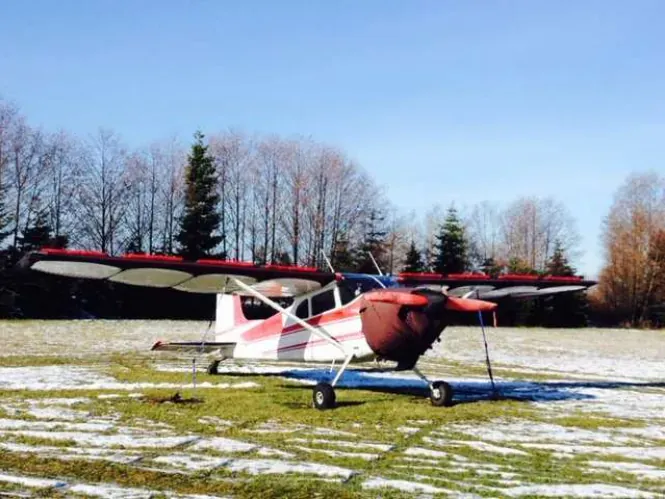
A few days ago, I was on xocial media and a fellow Falconer had a Prairie Falcon that needed a home. I knew another Falconer that could possibly use him. So, the connections were made and I told the recipient that I would fly over and pick up the Falcon in Goldendale and put it on the airlines to Sacramento, CA. Well, as you would guess the day of the transaction confirmation was great weather and the next day also. But the California falconer could not be there at the airport to get the bird. These birds are very special and even though they could wait until the next day to be picked up we just don’t do that.
Then in comes storm after storm right up through the Puget Sound corridor. I could have gone direct in CAVOK weather the other two days. But I was delayed for one week.
The weather finally became flyable without lots of turbulence and low ceilings along the way. I took-off.
As it might turn out in came low-but-VFR weather and lots of rain at 40-45 degrees Fahrenheit. Perfect carburetor icing weather. I noticed the manifold pressure on the engine gauge going down — a sure sign of carburetor ice forming.
So, what do most pilots do?
Most pilots are simply afraid to pull carb heat knob out to thaw out the ice forming in the venturi of the carburetor. I have talked to pilots on the radio that were about to make emergency landings because of the loss of power.
I asked them if they had pulled carb heat and they said no. That will make the engine quit, he said. It’s going to quit soon anyway, I radioed back. “Pull the carb heat knob all the way out,” I suggested. They did and the engine made some noise and vibrations and maybe even a loud bang and started running smooth again. That was all from the ice melting and going south down the intake manifold.
I have been in many airplanes with normally aspirated engines and a slight vibration starts and I look at the engine instruments and sure enough, carb ice. The remedy is, Pull the Carb Heat knob and all is fine.
I pull the knob out all the way to the stop because I don’t have a carb temp indicator. A good indicator will give you a range markings of green and yellow and red to the amount of carb heat. It will even tell you the temp to keep the carb heat on to keep ice from forming.
Some people say to only pull the knob out a little. Unless you have a Carb Ice temp sensor, don’t do it. Pull the knob all the way out. The engine will not quit. Add some power and your back in business. Then when the ice melts, you can restore all the knobs and levers to their normal position. Be on the look out for more ice.
Alaska it gets so cold we fly around with carb heat on all the time. Yes, all phases of flight from Take-off to Landing. The reason? Because as you know fuel does not vaporize very well in super cold temps and this will help accomplish that. The engines would run rough and when the carb heat was on it would run smooth. Not to mention the fact that the engines run real lean in the cold weather. Carb heat will enrichen the mixture by getting all the fuel vaporized.
I knew a Super Cub Pilot that changed his whole ignition system and still had a rough running engine. I came along and asked him if he had tried to use carb heat on take-off and he said nope. Well, give it a try. He did and the engine ran smooth. We were in McGrath, AK. The temperature was about minus 20 degrees. He was a new guy to this cold flying and had not had the benefit of some winter hangar flying.
Another buddy in a C-180 took-off on a super cold day. As normal, he started to lean out the engine and his engine almost quit. It was running Real Lean already. Just a little leaner and it almost quit.
I’ve also seen guys come back from the run-up and say they had no indication of carb heat coming on. They actually witnessed the RPM go up on the pulling of the carb heat knob. Ha-ha, Guess what? They had the perfect conditions for carb ice on taxi out to the run-up area. It was a normal indication. The had ice and as it thawed as normal the RPM recovered.
It’s getting colder, so remember to warm those engines before start up for a happy engine. Look at your leading edge when flying to see if the effect of moist air becoming super cooled as it hits the leading edge is forming ice. If it is forming and you have a heated Pitot System turn it on and keep it on to keep the airspeed indication from deteriorating.
I got the Falcon to its new owner and everyone is Super Happy. The Falcon is doing real good and is taming down nicely and will soon be flown on jackrabbits. Prarie Falcons will also run any other bird out of their territory. Including Eagles. They are truly Bad Ass birds.
Happy flying in the Cold Weather with the great performance.
Mike Radford EAA chapter 430 President