 EAA Chapter 430
Wright Brothers Master Pilot Award: Barry J. Halsted
Open the PDF at page 3 See the whole August 2019 issue
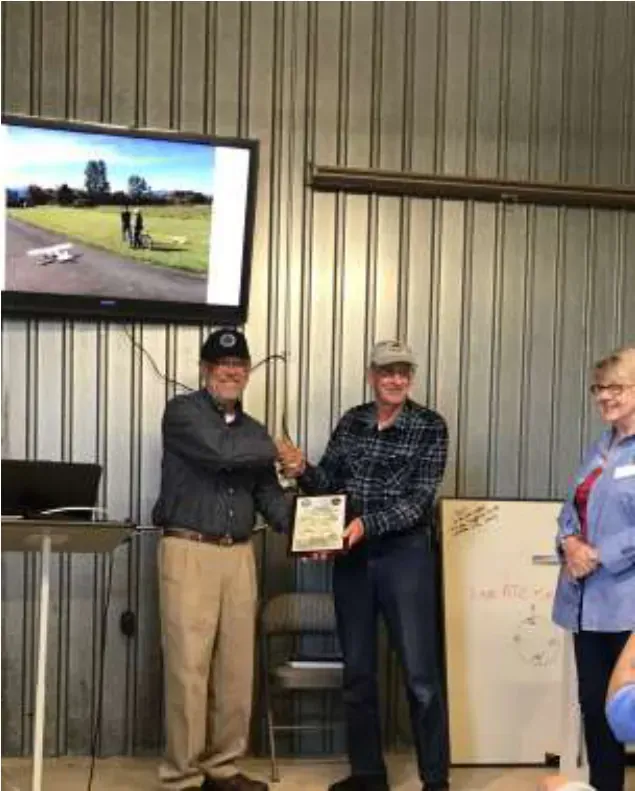
The Wright Brothers Master Pilot Award is the most prestigious award the FAA issues to pilots. This award is named after the Wright Brothers, the first US pilots, to recognize individuals who have exhibited professionalism, skill, and aviation expertise for at least 50 years while piloting aircraft as “Master Pilots.”
Barry J. Halsted (R) received this award from Ray Ballantyne (L), as Tracy Boulton looks on. Ray was representing the FAA Northwest Mountain Flight Standards Division. Barry was honored at the Sequim Valley EAA Chapter 430 monthly Gathering on Saturday, July 27, 2019.
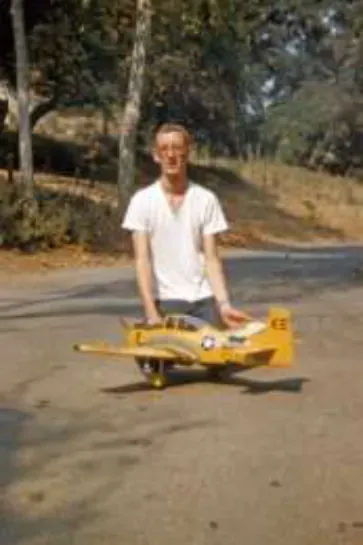
Barry Halsted was born Feb 18, 1943 in Wichita, KS where his father was working as a preliminary design engineer for Boeing. Barry, only 6 years old, watched his dad build a pair of stick and tissue rubber powered models and he was hooked on airplanes forever. Through high school, his whole life was building and flying model airplanes. Control line, free flight, and early RC model building consumed him. It was only natural that following high school he pursued a Bachelor of Science degree in aeronautical engineering from California State Polytechnic College and graduated in 1966.
Conventional wisdom during that time said that only those with perfect vision could become commercial pilots. From the third grade on, Barry wore glasses and thought he could not be a pilot. While working at his first job in a hobby shop, a customer who had seen some of his models encouraged him that vision shouldn’t keep him from flying. So, he started flying in college and it changed his life forever. Real airplanes replaced the models he had built and flown.
He soloed a Cessna 150 on July 8, 1963 and received his private pilot license in January 1964. Barry continued training for a commercial license, but after being signed off for the check ride, he was unable to get a Class II medical due to the vision thing. Not to be dissuaded, he got an instructor’s license and began teaching his friends how to fly. Two months later he received a vision waiver and immediately got his commercial pilot’s license.
Barry worked as a flight instructor at Flabob airport (EAA Chapter 1) during his last year at CalPoly. During the next couple of years, he added instrument, multi-engine and single engine seaplane ratings, Certified Flight Instructor Instrument authorization, and Advanced Ground Instructor license.
After college, he moved to Seattle and flight instructed part time while also working at Boeing as a flight test engineer. He applied to the airlines, but was essentially told there were more than enough applicants with perfect vision applying and he finally gave up applying.
Pacific Aviation was a small flight operation in Seattle, where Barry was flight instructing part time. They branched out as a Champion Aircraft dealership and he readily took on selling aircraft part time. This turned out to be so much fun that he left Boeing and turned sales into his vocation. In 1972, Pacific Aviation was the 5th largest Champion dealer in the country. Champion Aircraft was subsequently purchased by Bellanca, and Barry left Pacific Aviation to work for the Bellanca Aircraft Company. During the following 7 years, he established Bellanca dealerships in 3/4th of the United States – what a fantastic job!
Following his Bellanca tenure, Barry worked three years for Piper Aircraft and thereafter for two aviation component manufacturers before moving into the avionics world. He retired in 2010 after having worked in the Avionics Industry for 15 years. This work involved both General Aviation and Airline aircraft and took him to 54 countries around the world. All during this time he continued to fly for both work and pleasure.
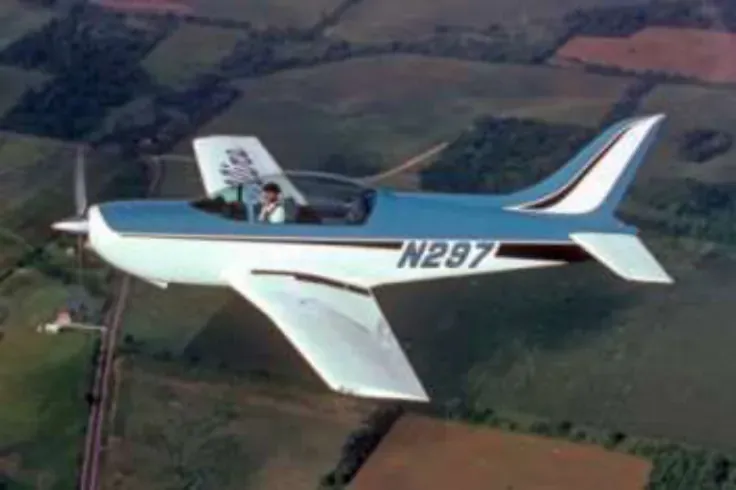
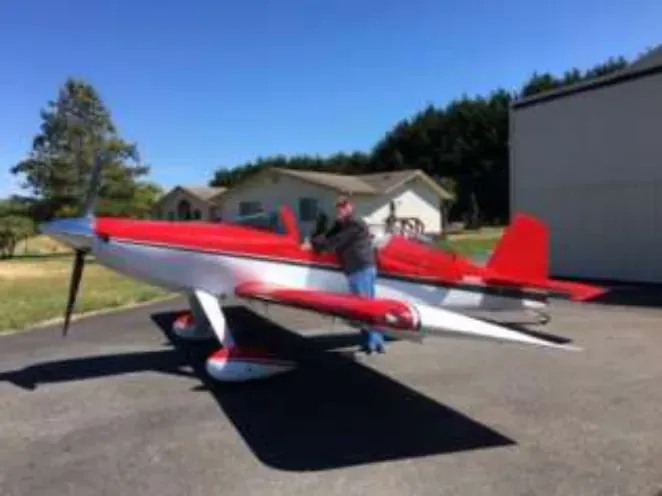
He joined the Experimental Aircraft Association (EAA) while he was working at Boeing in Seattle and built a Starduster Too experimental biplane. Later he designed and built Saffire, an all metal, retractable gear 200 mph airplane that won a Lindy award at Oshkosh, and 20 years later won the coveted Paul H Poberezny award. These honors led to 16 years of judging amateur built aircraft at Oshkosh. Over the years he has held a zero altitude aerobatic waiver, obtained an Aircraft and Powerplant Mechanic license, fathered several Supplemental Type Certificates (STC’s), restored two PA11’s and modified several other aircraft, including Harmon Rockets. He has owned 29 airplanes and has flown over 10,300 hours to date, mostly as PIC. He currently lives at Rake’s Glen airstrip with another hangar at Chino, CA. He is still active in EAA430, Quiet Birdman, and many other aspects of aviation. (written by Ray Ballantyne)