 EAA Chapter 430
Welcome New EAA 430 Members
Open the PDF at page 3 See the whole December 2019 issue
John Ward
I started flying in 1991, training at West Houston Airport for my single-engine rating. In 1996 I joined the Soaring Club of Houston and never went back to airplanes. Well, so far. In 2000 I moved to Minnesota and joined the Minnesota Soaring Club, where I enjoyed good company and many wonderful flights, even when I had to drive three hours to get to the airport. Since moving to Port Townsend in July, I ferried my Pipistrel Sinus out in September and have been getting used to the area’s aviation activities.
I’ve flown many models of glider, owned two Schweizer 1-35s (not simultaneously), and for four years have been the happy owner of motorglider N81028, a factory-built experimental-registered Pipistrel Sinus. Next time you visit the Spruce Goose at 0S9, just look for the long, white wings. Or, better yet, let me know of a home with a roof for it.
I heard about EAA 430 as I was getting acquainted with the flying community around Port Townsend. Someone at the Aviation Museum recommended y’all as friendly, active, and knowledgeable. This is my first connection with the EAA, though I’ve long been a member of the Soaring Society of America (SSA) which has begun building closer ties with the EAA.
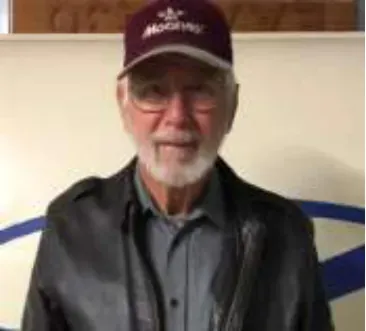
DAVE BOERIGTER (EAA 325862)
I first joined EAA 430 23 or 24 years ago then dropped that membership to join Chapter 1026 in Port Townsend. I remained an EAA member but did not rejoin 430 until this year. In the meantime I did fly many Young Eagle flights with 430. President Ken Brown leaned on me through our membership in another aviation-related group to rejoin which I did this year.
I started flying as an Air Force navigator in the old Strategic air Command in 1957. I first soloed as a pilot as a member of the Bunker Hill AFB Aero club in 1958 or 59 in a J3 Cub. I passed my private in 1966 and my commercial, multi engine and instrument rating in 1973. I have owned my 1967 Mooney M20C since 1994 and have used it to attend Oshkosh four times through participation in the Mooney Caravan to OSH including the very first caravan.
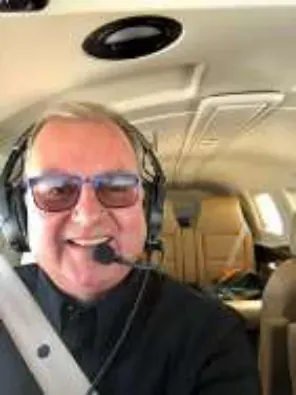
Dan Gase
My flight experience began in 1970 at William R. Fairchild Int’l Airport flying a C-150 and Piper J -3 Cub ($8.00/hr. wet) through the Explorer Scouts sponsored by a couple Coast Guard pilots out at the base. Later used the GI Bill to help finance commercial, instrument and multi-engine ratings in Olympia. I’ve logged time in about 25 different aircraft types, a master of none. “Mid -life crisis” brought on the need to hover so I obtained a helicopter add-on rating and could finally land on my own front yard helipad. Aviation took on a new dimension in early 2018 as I took on the role of airport manager at CLM. Love the job, the people, the aviation world!
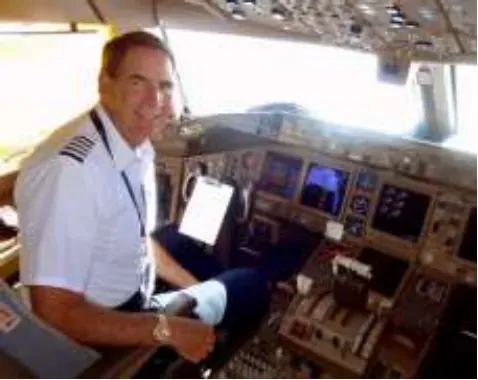
Jeff Smith
This is my first EAA chapter membership. My father was an Army missile officer, so I spent my younger years living around Air Force bases. The Army missiles were there to protect the planes. Grew up with a ceiling of model airplanes and all I ever wanted to be was a pilot. Got a four year AFROTC scholarship to college and was a Distinguished graduate in 1974. The Vietnam war was over and the Air Force didn’t need any pilots, so I went in as a Procurement Officer for two years and was ultimately able to do pilot training at Columbus AFB, MS. From there I went to Guam and flew B52’s for two years. After that I went to Scott AFB, IL and flew the C140 Jetstar and did flight inspection of NAIADS all over the world, including Area 51 and Tonapah, NV, where the secret F117 was based.
After ten years in the Air Force, I separated and was hired as a pilot for American Airlines. I was an engineer on the B727 and then a first officer on the B727 and DC10. The airlines hire in spurts,, and I was lucky enough to get hired in 1984 as 113th pilot hired, and then they hired 8000 after me. After five years I was able to become a captain and flew the DC9, B757, B767, B777 and finished up flying as an international captain on the B787, flying between DFW and China. I retired in Oct 2018 after a thirty-five year career. The early airline years were financially difficult because we were paid half pay for the first five years, so I joined the Navy reserve and flew DC9’s and retired from the Navy in 1994 after a stint in Desert Storm.
My father was based at Ft. Lawton, which is now a closed Army post just west of Seattle. I always wanted to retire to this area, so I moved to Port Angeles in 2016. I am currently flying for Rite Bros. Aviation, just doing short hops around the area.
This has given me an appreciation and love for general aviation. I also have a new respect for the demands of flying VFR with all the airspace restrictions and going from grass strips to Boeing Field. Flying single engine Cessna’s has re-acquainted me with small aircraft, but it isn’t very stimulating. I think I would like to purchase an IFR RV8A, due to my size of 6’3” for fun and travel. At my age of 66, I don’t have the patience to build my own. I would like to help other members on their build projects to learn all I can about this area of aviation, since I don’t have a background in it.
BILL BERSON (Port Townsend)
My first airplane fascination memory was around age 6 watching the 727’s on final landing at Fort Lauderdale, Florida where I was born. At age 12, My dad moved the family 6000 miles to Chugiak, Alaska. I helped my dad build our new house, just one mile from Birchwood airport. After a few years they started a glider club at Birchwood and I joined and got my glider rating. Also got my airplane instruction free while working at the maintenance hangar. My friend worked there also and later we started an aircraft paint shop at Willow, Alaska. My brother and I restored an Aeronca Chief and I flew that to work sometimes. Later I bought a Piper Cherokee and used that to tow gliders mostly.
By 1980, Birchwood airport had hundreds of airplanes parked at tiedowns and I was able to build a maintenance hangar. After a number of years doing rebuilds and annual inspections as an A&P-IA, I decided to sell. Moved to Port Townsend, WA in 2002.
I own a Grob G109 motorglider that I bought and restored to give commercial rides. I also bought a partially finished Avid Amphibian kit to assemble in the future.
My major priority, however, has always been engineering and experimenting with low powered engine and airframe designs. In 1980 I designed and built a single seat, aluminum twin engine motorglider. I am back to experimenting with a new and improved version now.
Doug Brundage
I’m currently a trike Paramotor pilot in my first year of that experience. I grew up in Anchorage, Alaska. While in An-chorage, beginning at age 7, I enjoyed flying to fishing and hunting spots with my father and brother out of Merrill Field or Lake Hood. I moved out of Anchorage after my father was killed at the Palmer airport.
I come from a flying family; each one of my brothers and sisters, mother and father have taken some kind of flight training during their lives.
My flight training begin at age 16 in Olympia, Washington. I earned my certificate at age 17. Since that time, I have flown light aircraft: Cherokee 140, c-150, c-172, and accumulated approximately 150 hours. To cut my cost of flying, I recently took up the sport of Paramotor and received training this past fall. I fly out of Sequim Valley Airport to enjoy the beautiful views and calm skies the valley has to offer. My Paramotor flies at a consistent 25 to 30 mph at low altitudes at less than a gallon per hour. I’m looking forward to warmer weather, exploring the valley, beautiful sunrises, and sunsets!
(Note from Editor: Our January newsletter will feature the rest of our 2019 new members)