 EAA Chapter 430
Airplanes R Us: Airplanes I Have Known (Transport Category), Part 1
Open the PDF at page 4 See the whole April 2020 issue
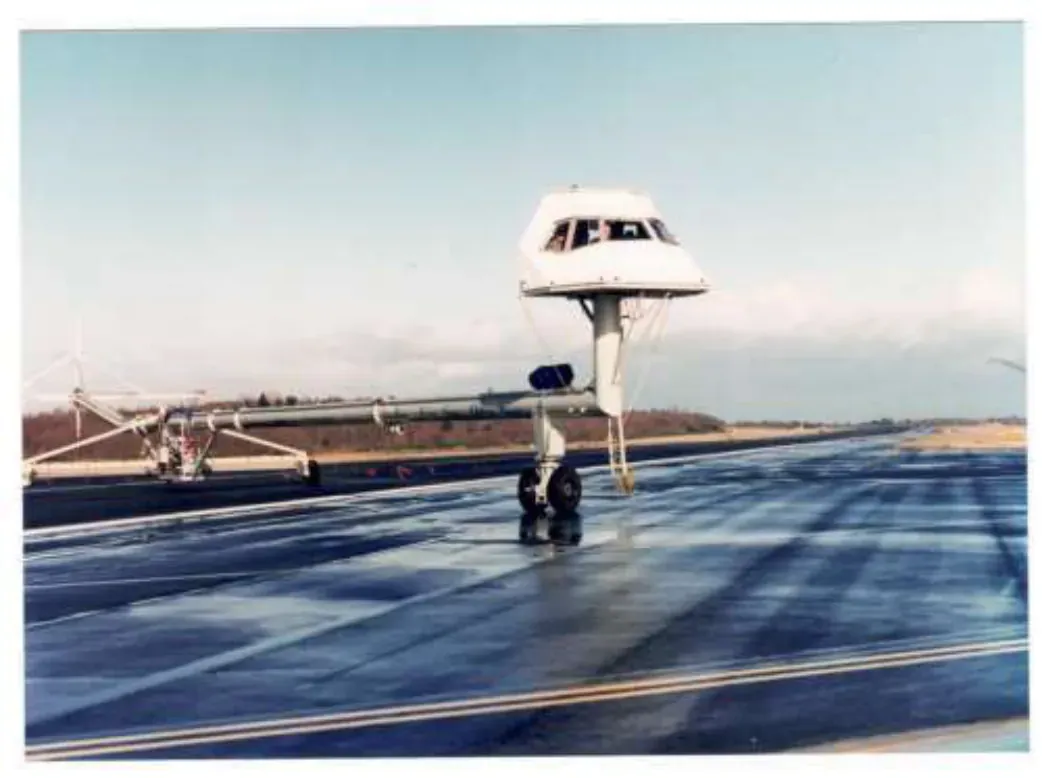
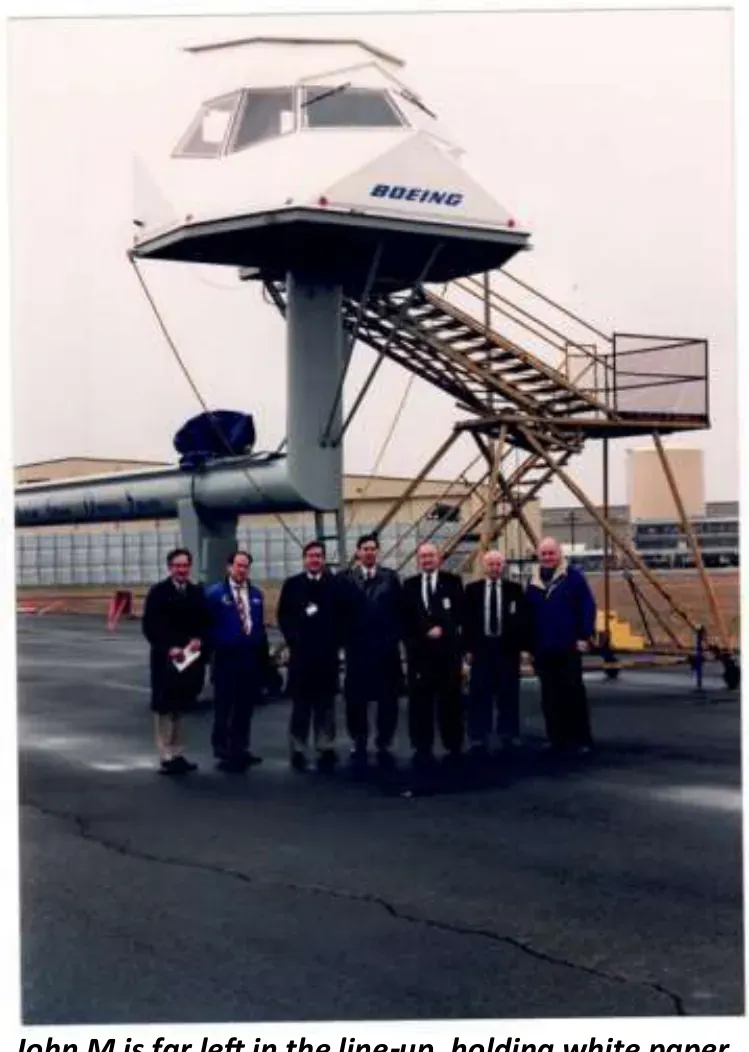
I have searched some old photos and came up with these images of an “exotic” airplane that I “flew.” Thankfully it didn’t fly at all but it did taxi quite nicely. The machinery was created by the Boeing Co. and was used in early 1994 to simulate the geometry of the new (at the time) B-777. I recollect my mission on this rig was in February 1994. There was a lot of anticipation and excitement regarding the REAL Boeing Triple-Seven which actually rolled out in April 1994, and flew its first flight June 12, 1994.
I was a United Airlines “project pilot” at the time. A small team from UAL plus Boeing staff were supporting this particular day’s mission. The rig had an elegant acronym for a name which I have long-since forgotten. It was built to test the wheel geometry of the B-777-300 which was the next-in-line production effort planned for 1995. The -300 would be a lengthier version of the airplane and although United was a launch customer, we bought only the -200 (in that era).
In the case of the taxi tests, Boeing and the airline customers had some concerns about the wheel geometry and the very long wheelbase of the -200 and -300 airplanes. This rig was fabricated at KPAE with a diesel hybrid hydraulic drive for locomotion with forward and reverse action. The steering resembled the actual airplane’s nose wheel response. The cockpit cab was arranged with realistic seating and window views of the real plane. Behind the pilot crew were benches where observers or tech’s could strap in and watch.
The objective for us was to follow a truck around a pre-determined course laid out on various taxiways and also the big runway at KPAE. (the truck got ATC clearances for us)
Ship’s cameras were mounted on the LT/RT “stabilizer” plus one behind the nosewheel. These 3 views would provide an instrument panel screen-view of left & right main gear, plus the nosewheel.
Among the questions: Could average pilots keep the B-777 on taxiways without cameras ? Were the camera-video views necessary ? Could the airplane do a 180-turn on a 150’ wide runway? For United’s part, we nixed the idea of cameras on the -200 airplane. Others said yes, so the cameras became standard on -300 versions ordered by other airlines. As far as the 180 degree turn on a runway, the answer was NO, unless there was a reverse segment at the 90 degree mark. This was easily done with diesel hybrid motors and cameras. Our engineering rep said that UAL would never consider the 180 maneuver by reversing real P & W engines so we nixed that one. Apparently in some parts of the world, other customers had interest in that possibility given that certain airports were lacking parallel taxiways. After the ride, Cashman took us to lunch in Mukilteo and we debriefed. Everyone was “high” on anticipation for the rollout and first flight of the real plane. In my case, I got to fly the Triple-Seven in October 1994 (one leg, Moses Lake to KBFI). United participated in the ETOPS (overwater long-legs) certification in Spring 1995, with first revenue flight June 7, 1995.
John Meyers