 EAA Chapter 430
A Tale of Two L-Bird Chicks Hatched on the Same Day
Open the PDF at page 5 See the whole June 2021 issue
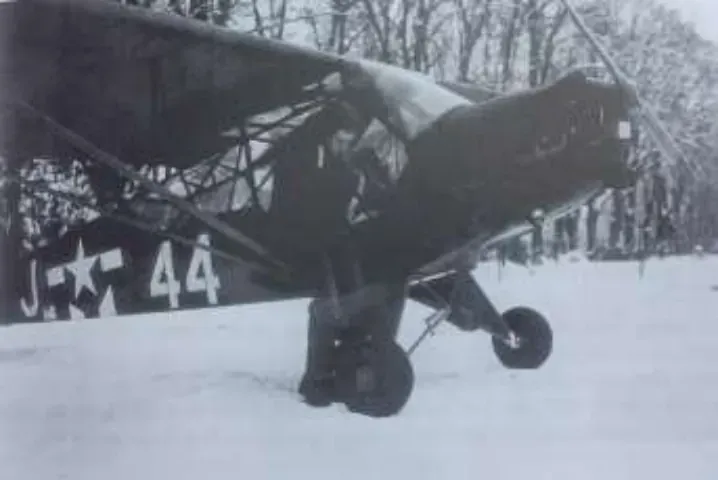
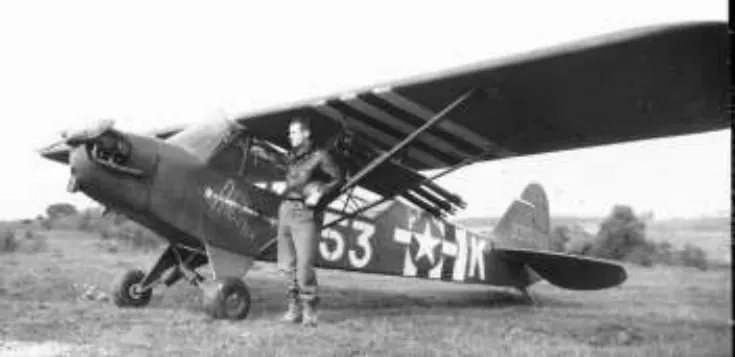
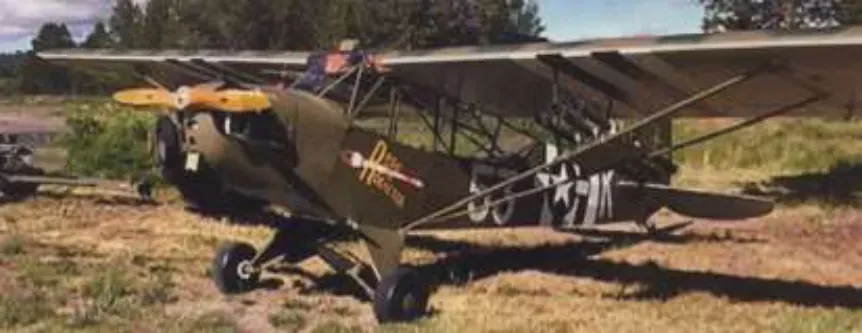
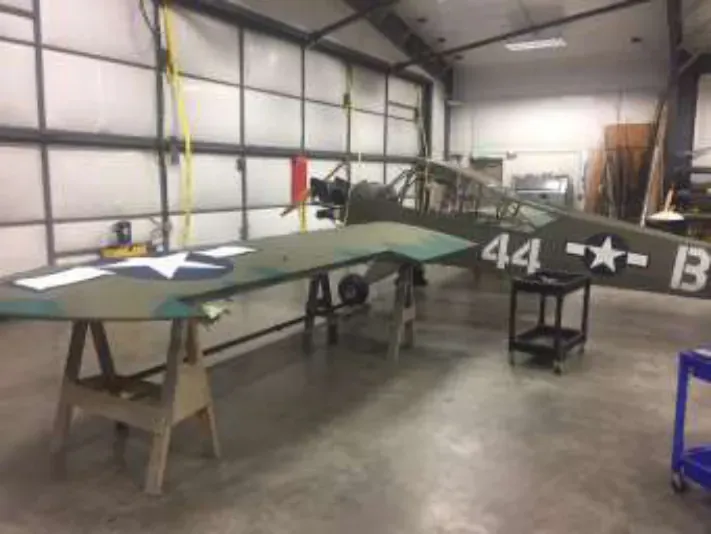
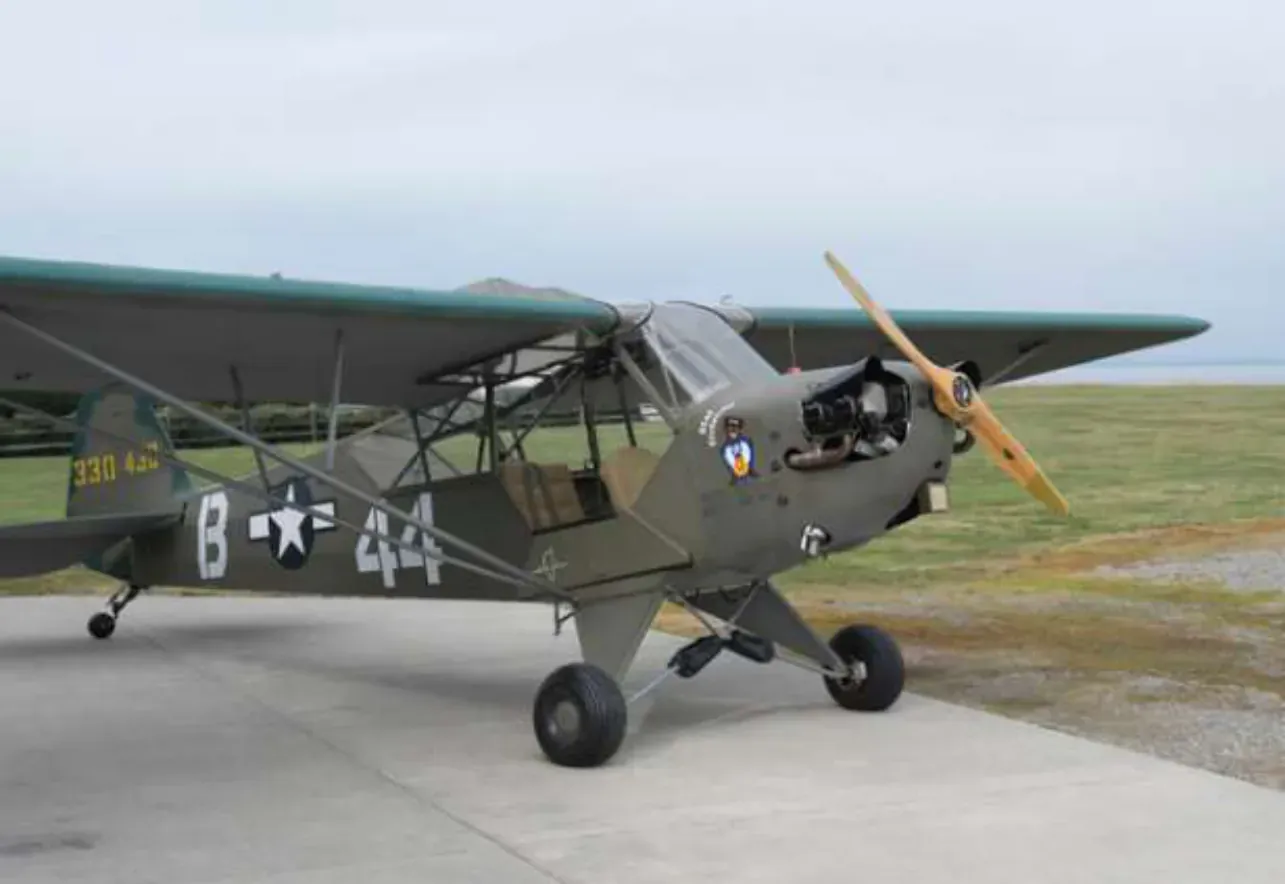
Grasshopper was the nickname given to the J-3 Cub military liaison aircraft. L-4H 43-30426 S/N 11717 and L-4H 43-30430 S/N 11721 were built during the first week of April 1944 at Lockhaven, PA. They were completed on April 6, test flown, accepted by the USAAF, crated and likely shipped to England on the same vessel. 43-30426 ultimately became famous as “Rosie the Rocketer.” As part of the D-Day build-up, “Rosie” was assembled in either England or France and was assigned to the 4th Armored Division as part of General Patton’s Third Army. 43-30430, my “Bear Essentials” was assembled in England and assigned to the Ninth Air Force. She was flown to France and then transferred to the 30th Infantry Division, Ninth Army on November 30, 1944. She flew during one of the worst winters of the century and in one of the bloodiest battles of WWII, the Battle of the Bulge, where the 30th ID was pitted against the German 1st SS Panzier Division north of Bastogne near Malmedy, Belgium. She was doing reconnaissance and artillery spotting as weather and conditions allowed. 44 is the identifier for the 30th ID and J is for the Battalion (one of twelve) this bird below was assigned to. B was picked by the former owner as the Battalion for “Bear Essentials.” Each of the 12 battalions was assigned two L-4s. Unfortunately, in all the research done on 43-30430, we have yet to find a photo, but key elements are seen on the L-4 in this one.
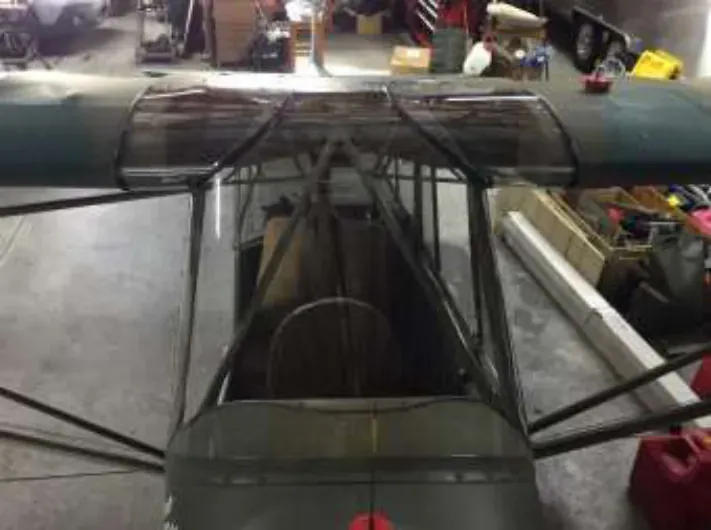
The aluminum wing root fairings (eyebrows) on many L-4s were replaced with Plexiglas (evident in this photo) for better pilot visibility, especially when spotting and evading German fighters in mid-1944.
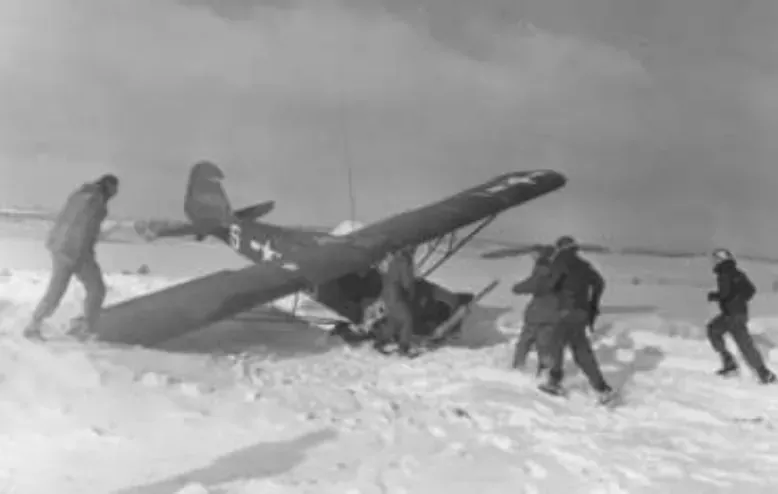
L-4 operational losses were well over 50% just due to the conditions that winter. 43-30430 was active throughout December 1944 and January 1945. During the month of February, she was turned into the 50th Mobile Reclamation and Repair Squadron for repairs. She was returned to the 30th ID March 2 and in combat for the push into Germany until wars end.
After the war she was purchased by a former L-4 pilot but remained active in France in a liaison and training role until shipped to the States in 1947 and re-registered as J-3C-65 N9217H. The vast majority of these aircraft were surplussed to European countries, as they weren’t worth shipping home. Not many have survived 76 years.
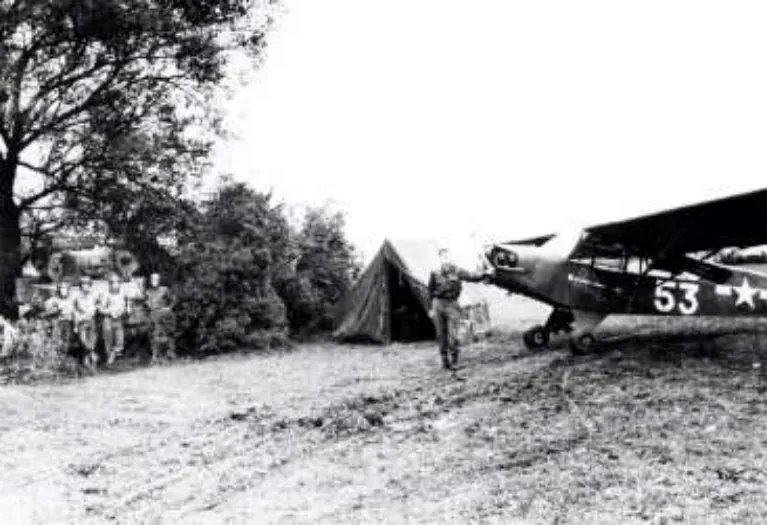
43-30426 was moved to France sometime after D-Day and assigned to Major Charles Carpenter for reconnaissance and artillery spotting in September and October 1944. Being a true warrior, he got approval to mount 3 bazookas on the wing struts of each wing which were controlled by a simple electrical panel in the wing root. He managed to kill two German Tiger tanks, four other tanks and several armored vehicles. He earned the nickname “Bazooka Charlie.”
Visible in this photo are the Plexiglas eyebrows as well as the standard L-4 air box - different from the air boxes generally seen on J-3 Cubs. Carpenter even added a P-38 mirror above the windshield to watch his 6.
The invasion stripes painted on for the D-Day Invasion were mostly painted out within a couple months after D-Day for better camouflage from German fighters. “Rosie’s” were completely removed in this later photo, but the museum elected to match the stripes based on the previous black and white photo that had them partly painted over. The 4th Armored Division moved into the Ardennes later in December 1944 with General Patton and the Third Army to support the Battle of the Bulge, but there is no documentation after November 1, 1944 about “Rosie.”
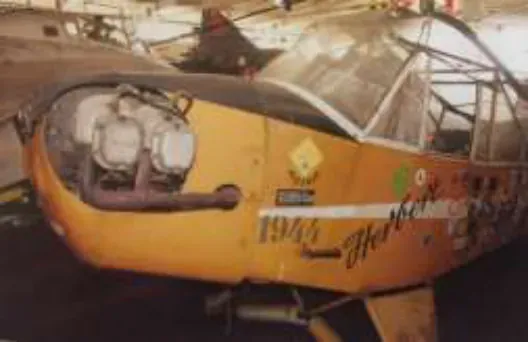
In 2017 it was discovered that she went to Switzerland after the war and in 1956 was re-registered in Austria where she towed gliders. She was acquired by the Osterreichisches Luftfahrtmuseum at the Graz Airport and was found there by the Collings Foundation where she was being restored as a static display.
“Rosie” in storage awaiting restoration.
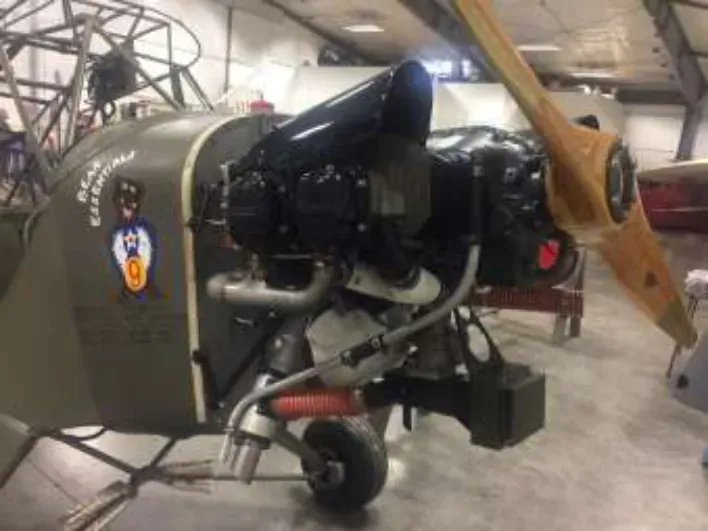
Collings Foundation photo / American Heritage Museum “Rosie” restoration to flying status completed in 2020 American Heritage Museum Working with the Port Townsend Aero Museum, my good friend Dave Miller and I completed the restoration of 43-30430 following structural problems discovered in the right wing last August, poor fabric work and areas of corrosion found in stabilizers and elevators. My goal was to complete the restoration started in 2013 where just the fuselage and rudder were done and everything else just repainted. Both wings, ailerons and horizontal control surfaces and landing gear were rebuilt, repaired and recovered. A L-4 air box was purchased from a Cub owner in the Czech Republic and WWII air filters were purchased from Fresno Air Parts. The exhaust system was redone to L-4 standards in seam welded stainless steel by Dawley Aviation in Wisconsin and the aluminum “eyebrows” were replaced with Plexiglas formed by a shop on the East coast. Mike Payne and Kevin Vogel supervised the project, doing a beautiful job on the fabric and Mike doing the color matching and painting. Mike did the initial test flight on December 4, 2020 to give her his blessing to fly home here in Sequim.
All the paint, markings and stencils on 43-30430 have been researched and are authentic to the year and unit.
My thanks to Joe Scheil who spent a lot of time with me discussing the history of both our aircraft in Europe for this article but, in particular, the history of the 4th Armored Division, its commander, Major General John S. Wood, and Major Carpenter’s contributions to the unit. The 4th Armored Division spearheaded General Patton’s Third Army drive across France and General Wood realized the benefit of the L-4 aircraft early in the campaign. They used the L-4s to find the Germans during the armored advance, not so much for artillery spot-ting. The dug-in anti-tank weapons in place at junctions designed to stop tank columns were critical to find. The Army did not want static battle lines to develop into a WWI trench warfare which could favor a defender. The armored columns were the spearhead through France which continued from July into November.
Joe is a warbird researcher and historian, as well as a J-3 Cub owner. He assisted in the restoration of “Rosie” and flies other warbirds, including the B-17 and B-24 as a pilot working with the Collins Foundation. He initially searched records, intrigued by stories of 43-30426 and “Bazooka Charlie.” He eventually tracked her down, linking her with the Piper serial number to an aircraft stored in Austria. The Collins Foundation was looking for a combat aircraft to restore that could capture the fight through France and into Germany. What could be better! He emphasized the extreme rarity of these two L-4H aircraft with combat records and how fortunate I am to have our documentation and own this piece of history. Of all the members of the Cascade Warbirds Chapter and their many listed aircraft, there is only one World War II combat veteran - “Bear Essentials.”
Dave Woodcock EAA 48244, Warbirds of America 611262