 EAA Chapter 430
Getting to Know You: Colette Miller (Reprint)
Open the PDF at page 27 See the whole May 2023 issue
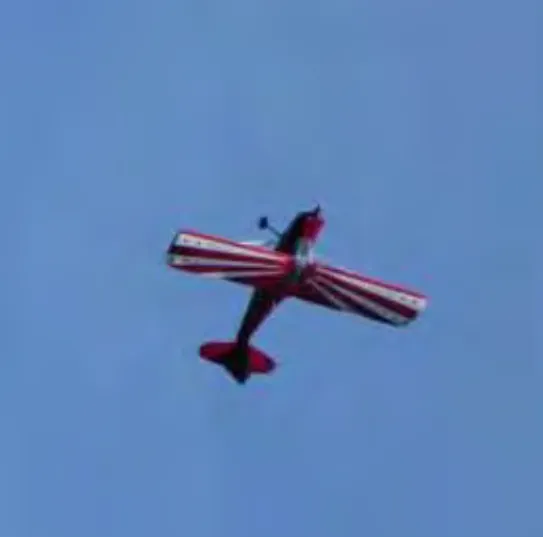
From co-newsletter Editor (2023 Erik), I had a wonderful phone conversation with Colette a few months back and was in awe of some of Colette’s stories and I wanted to learn more. Colette mentioned that Skip had done an extensive interview with her; this is that article From the Editor (2019 Skip Brown): Before interviewing a chapter member for the newsletter, I send them a questionnaire, with questions about their life in aviation. The following are the questions and answers from Colette:
How old were you when you became interested in airplanes?
Very Young. As a child, I used to dream I would escape the T-Rex or other monster by flapping my arms and fly- ing above them. My father was a pilot and I always felt safe in the sky.
When did you get your private pilot’s license? Late 60’s
What was your first airplane? What airplane (s) are you
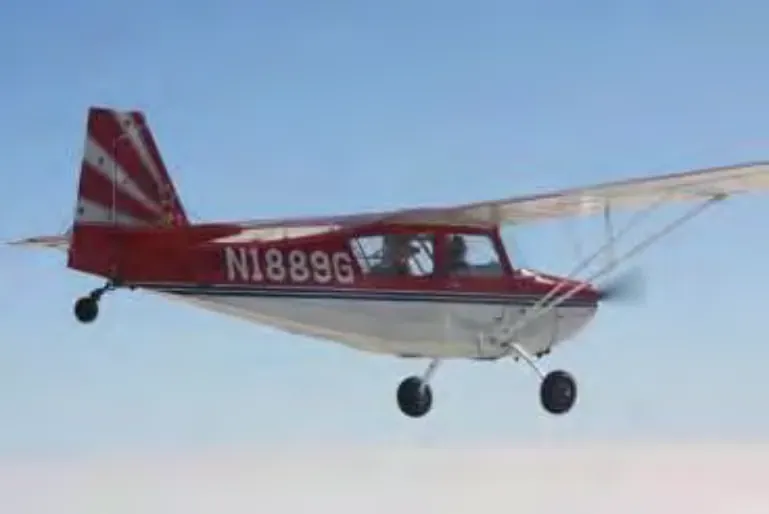
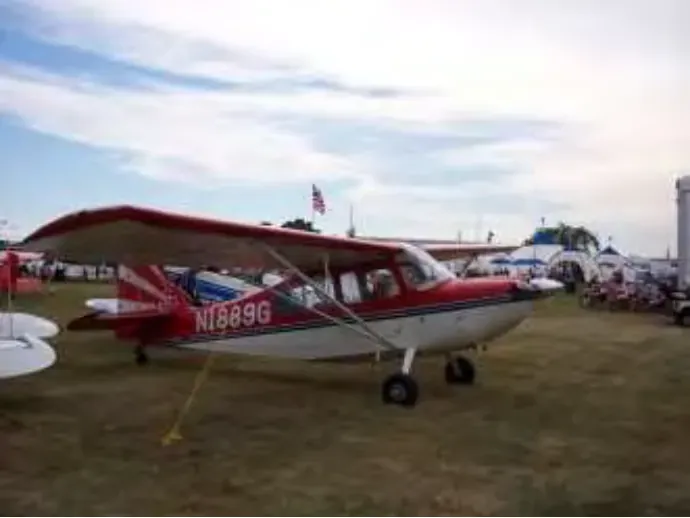
currently flying? I learned to fly in a 7ECA, Citabria. I presently have a 7KCAB Citabria and a Sonex. I am also building a Sonex with the Jabiru engine and the aerobatic wing.
Airplane partnerships I have had include a Luscombe 8A and a 7AC Champ, which 5 of us rebuilt.
What ratings do you have? Instrument, commercial Your experience in EAA 430 or other chapters where you were a member: Starting my build in Tor- rance with help from the Compton chapter, rebuilding the Sonex project I have in Michi- gan with incredible help from the chapter at Sawyer in Marquette, fun and great learning experiences in IAC chapters in southern California, including being part of reinstating a practice aerobatic box at Redlands, and getting to help a little in establishing a practice box at Fairchild in Port Angeles.
EAA events you have attended or participated in: Oshkosh, Sun ’n Fun, YE or others. I have been to Sun ‘n Fun once. I have attended Oshkosh every year since 1993, except for the year my husband, Dick, died and the year after that, when I was still building my house in Diamond Point. I have flown Young Eagles out of Compton, California, where our EAA chapter was located.
Your background: Where did you grow up? Different places you have lived, education/training:
I grew up in the Los Angeles basin, in Downey, California. I attended Downey High School, got my bachelors (History, with minors in Economics, Music, and Anthropology) and masters (applied socio-linguistics) degrees from Long Beach State. I studied opera at the International Opera Studio in Zurich, Switzerland. To pay for college, I worked as a portrait artist at Disneyland, thus getting invaluable training in portraiture.
Obviously, I lived and studied in Switzerland. My husband and I built a house in the north woods of the upper peninsula of Michigan in 1993 and spent our summers there for 22 years. We lived at the most northern point of Lake Michigan, which put us 250 miles from Oshkosh, thus the visits to the big fly-in.
Since we were both teachers, we could spend our summers traveling with the kids and working at drawing portraits at art shows or in tourist communities. That gave us oppor- tunity to spend summers in Jackson Hole, Wyoming, Breckenridge, Colorado, and Sau- gatuck, Michigan, as well as traveling through most of the United States.
How long have you lived in this area? We bought property in Diamond Point in 2016. My hus- band died as we were packing to move to a condo we had rented in Port Angeles. That was in June. We had sold our home in Anaheim, so I had no choice but to continue the move to Washington. My son, who had found us the condo, helped me move my stuff, and I moved my plane north to a hangar at Fairchild in July of 2016. My house was completed and signed off on March 3 of 2018.
What is or was your occupation? I taught high school and community college for 43 years. The schools I have taught in are Garden Grove High School, Millikan and Cabrillo High Schools in the Long Beach School District, and Santa Ana Community College, and Colorado Mountain College. Like my husband, I held a General Secondary Credential, which is no longer issued by the state of California. Under this credential, one can teach anything taught in the public schools from grade 7 through 14. Yes, that includes community col- lege. I usually taught English, History, or Art. For the last 14 years I taught English as a Second Language. The scariest thing I ever taught was Driver’s Ed., but I also have taught French, German, Music, Drama, Home Economics, Knitting and Crocheting, Calligraphy, Pastel Portraiture, and Choir. I am still a working artist, doing portraits and wildlife paintings in pastel or oils. I also do quick sketch portraits and have taught workshops on how to draw them. I would like to teach such classes again.
Besides airplanes & flying, what are your favorite things to do? I enjoy hiking, bird watching, car- pentry, music, art, reading, building aircraft, singing, playing the piano, and trying new things like building a non-mortared stone retaining wall. (my latest project)
Do you have any unusual, humorous, harrowing or exciting experiences you can share? When one is in one’s 70’s, there are many tales to tell. It’s hard to know where to start or when to stop. I guess I’ll tell you a story from my student pilot days.
On my first solo cross-country, I was flying an old Citabria out of Orange County Airport (now John Wayne). Like many planes in flight schools, it had seen better days. When I landed at my destination at Palomar, I may have landed hard. In any case, my tailwheel was acting funny and the local mechanic said a spring had come loose on the tailwheel steering assembly, and baled it on with safety wire. He told me to land straight and then make wide turns when taxiing.
I took off toward Orange County Airport, only to discover my radio wasn’t working. As I approached home base, I noticed the winds were buffeting me, but I saw a small Cessna in the pattern, so I assumed it was safe for small planes to land. As I approached the air- port, I rocked my wings and got a green light from the tower, so I proceeded to enter the pattern, but had trouble turning downwind. I assumed it was because my tail had baling wire on it, but by the time I turned the plane onto final, I had figured out the wind was extremely strong and blustery. For the first time, I thought I might actually crash the plane.
I remembered what my father had told me about landing in bad winds: “Keep some power on, keep her straight, and don’t put the tail down until you have her under control.“ I fol- lowed those steps and got on the ground, but didn’t feel I had control, so I just kept her straight down the runway. It was probably 2 miles long and I was more than half way down it when I realized I had to put the tail down eventually, so I did.
When I got the plane stopped, the wind was shifting to a right crosswind and I couldn’t turn my tail into the wind and get off the runway, possibly because of the tailwheel, or the wind strength or both. Fortunately, when I took so long to stop, they had sent out the rescue trucks. Those guys helped me turn the airplane and get it tied down along the run- way. I didn’t even know there were tie-downs way down there. Then they said the tower wanted to talk to me.
Oops, I figured I was in some kind of trouble for taking up the whole runway. Instead, they congratulated me for making the landing and told me that I was the first person in a light plane who had the guts to land there in the last two hours. “But I saw a small plane practicing in the pattern.” I said. They answered that he wasn’t practicing, he was trying to land and had given up and gone to Fullerton. The wind was in the high 30s and reached 40 knots while we were talking. They said that if it got much stronger, they would close the airport to all traffic. When I told them that it was my first cross country and told of my misadventures with the tailwheel and the radio, they congratulated me again. I didn’t tell them that I, too, would have given up if I had checked the windsock and known how to read it properly. It was stupidity rather than bravery, and I almost committed a fatal error. It was one of those God helps fools and children moments, but I learned to have a healthy respect for winds on landing.
What is in your bucket list? I don’t really think in terms of bucket lists. I find that I like pur- suing interesting hobbies which I discover as I go through life. I once had a goal of seeing every great lake in the world. I have seen Lakes Michigan, Huron, Erie, Ontario, Superior and Victoria. I would like to see Great Slave, Great Bear, Lake Nicaragua, and perhaps Lake Baikal. But other things seem to grab my attention, so I may never finish that quest. I guess the only item I really have on my bucket list is to finish the Sonex project I am presently engaged in and do first flight.
Any philosophical thoughts, goals, objectives or instruction for EAA members?
Be a good listener and a good observer. Take advice, you can never learn too much. There is always something you don’t know and probably need to. Knowledge is a treasure that can’t be stolen or destroyed by fire or flood. It is also a free gift you can pass on to others.
What is something most of your friends/family don’t know about you? I talk way too much. Fami- ly and friends probably know more about me than they want to.
And Now the Rest of the Story:
Colette is a member of IAC (International Aerobatic Club). “My father encouraged me to do aerobatics. The first time I did them with Mac, my instructor, I was hooked. He taught me how to spin and I think
I made him sick because I kept saying, let’s do that again.”
“I refused to teach Driver’s Ed for a second year after I got a third ticket. When a student had an in-fraction while driving, the instructor got the ticket! It was not one of my prouder moments!”
“I was considered a protégé when I was two years old and started drawing. I had my first “job” as an artist when I was 12.”
“My mother was a concert pianist and my father was an aeronautical engineer, so my short-lived career as an opera singer and my life-long career as an aviator came naturally.”
“My husband, Dick, and I bought property in Diamond Point so I could continue flying and be his care-giver at the same time.”
Colette has a son who lives in Kirkland and a daughter in California. She has a grandson, a granddaughter and a great-granddaughter.