 EAA Chapter 430
‘Idita’ Tower: Controllers Work Remote Operation for Safety
Open the PDF at page 3 See the whole March 2024 issue
 (opens a larger view)
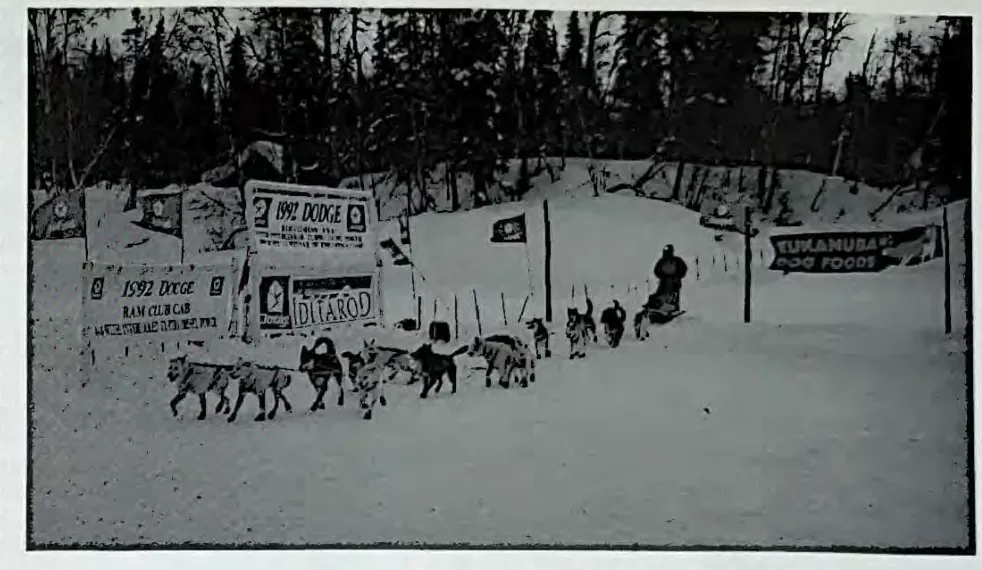
The Iditarod sled dog race from Anchorage to Nome is known as the “last great race.” The 1,049-mile course takes mushers through some of the most hostile terrain on earth, often during winter blizzards, yet the international popularity of the race increases each year, with more and more people traveling to share in the excitement and activity along the trail. Most mandatory checkpoints along the course are accessible only by snow machines or aircraft, which creates high concentrations of air traffic over normally sleepy airstrips.
For safety’s sake
To avoid midair collisions, runway incursions, and chaos in the airport traffic area, a forum of aviation user groups requested FAA’s Alaskan Region assist in establishing a temporary airport traffic control tower at Skwentna.
Located 75 miles south of Mount McKinley, Skwentna has 114 residents scattered about the nearby hills. The population nearly triples during race time with sponsors, media personnel, and assorted tourists creating a Mardi gras-type atmosphere. To move the visitors in and out during the short Alaskan day, aircraft had to arrive and depart continually.
Setting up temporary control towers in remote locations is nothing new to the Alaskan Region. They have been operated in such remote areas as Beaver, Tanacross, Anvik, and McGrath to aid the fight against forest fires. During the 1989 Exxon Valdez oil spill, an advisory service was provided for the entire Prince William Sound from the Coast Guard cutter Rush, in addition to the temporary control tower at Valdez.
There was one big difference, however: A temporary facility had never before been operated at a remote site during the dead of an Alaskan winter.
Anchorage to Skwentna
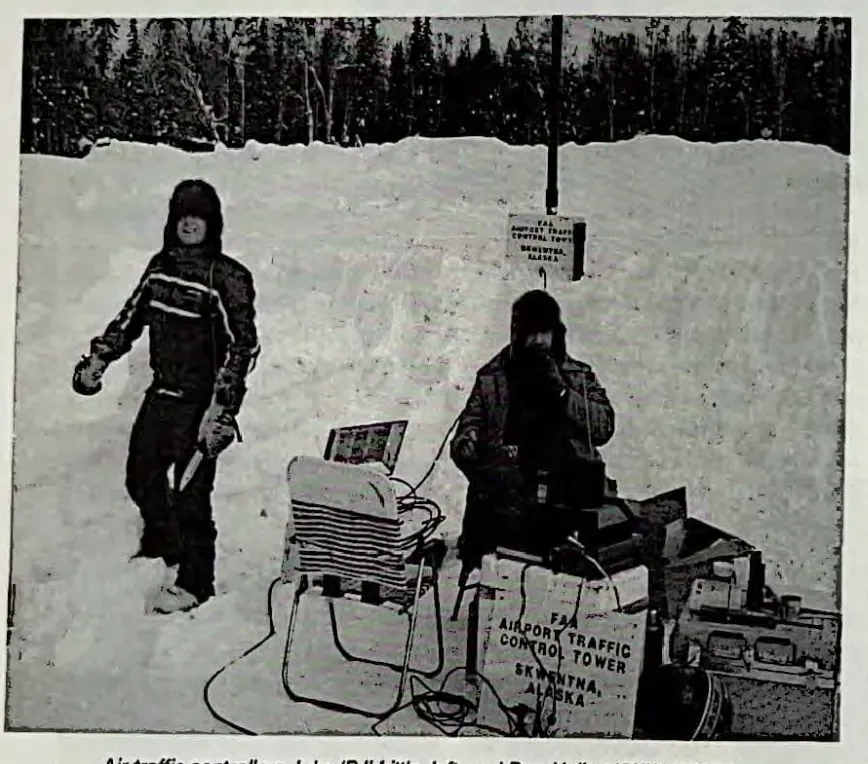
Pulling the “lucky numbers” to staff the tower were Don Hall and John “BJ” Little, controllers from Anchorage tower. Both of these long-time Alaskans enjoy outdoor activities year round and are no strangers to cold weather.
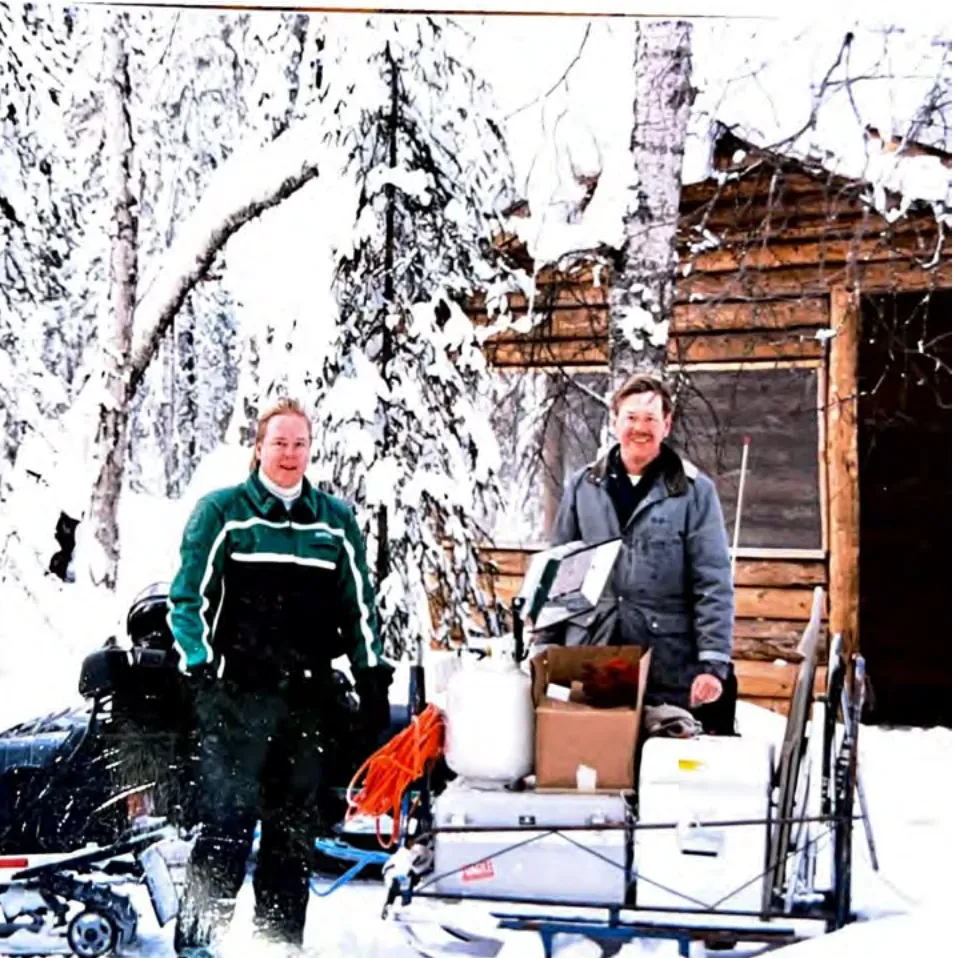
The venturesome controllers covered the 65 miles to Skwentna by POS (personally owned snow machine) at 20 cents per mile, pulling a 200-pound sled filled with survival gear and radio equipment. Starting off in a blinding blizzard that dumped 20 inches of snow on the Anchorage area, the trail down the Susitna River was indistinguishable, and visibility was very low. Inanattempttorideover thedrifts, the sled became imbedded in a nine-foot snow cliff, destroying its hitch and tongue.
After its emergency repair with rope, the sled worked fine up hills or on level ground. On the downgrades, however, it would try to pass the snow machine, which then had to increase its speed. The ride was wild for the remaining 30 miles.
At the Yentna River turn, a 1,500-pound moose and calf had positioned themselves in the middle of the trail.
High snow prevented the snow mobiles from navigating off the trail, and the hardpack was too narrow for the controllers to turn around or pass. Hall and Little came to a forced stop, hoping the moose would walk away, but the huge animals just glared and laid back their ears. After some patience and persuasion, the moose left the trail, and the controllers sped on. Arriving just before dark, thecon-trollers settled into a cabin at John and Joyce Logan’s Skwentna Roadhouse.
Pulling together
Lots of time and work go into setting up a temporary facility. Airspace and frequency notifications need to be made, radio gear and equipment assembled, and coordination accomplished among numerous government agencies. Henry Elias, regional Air Traffic Division manager, received excellent cooperation from both FAA and outside organizations. The entire aviation community pulled together to make it safe for the “Iditarod airforce.”
For instance, the Regional Operations Center provided handheld radios and a portable generator; Flight Standards cosponsored the setup and helped with logistics; Airway Facilities provided a portable antenna and cellular telephone; the Airports Division expedited the paperwork and coordinated with state agencies; and local Air Traffic facilities provided portable transceivers and personnel.
The Alaskan National Guard agreed to transport a small building provided by the Alaska Sled Dog and Racing Association but were unable to make the airlift because of the heavy snowfall in Anchorage. Also, the Civil Air Patrol transported personnel and equipment in a ski-equipped Dehaviland Beaver.
‘Beach-like’ in the snow
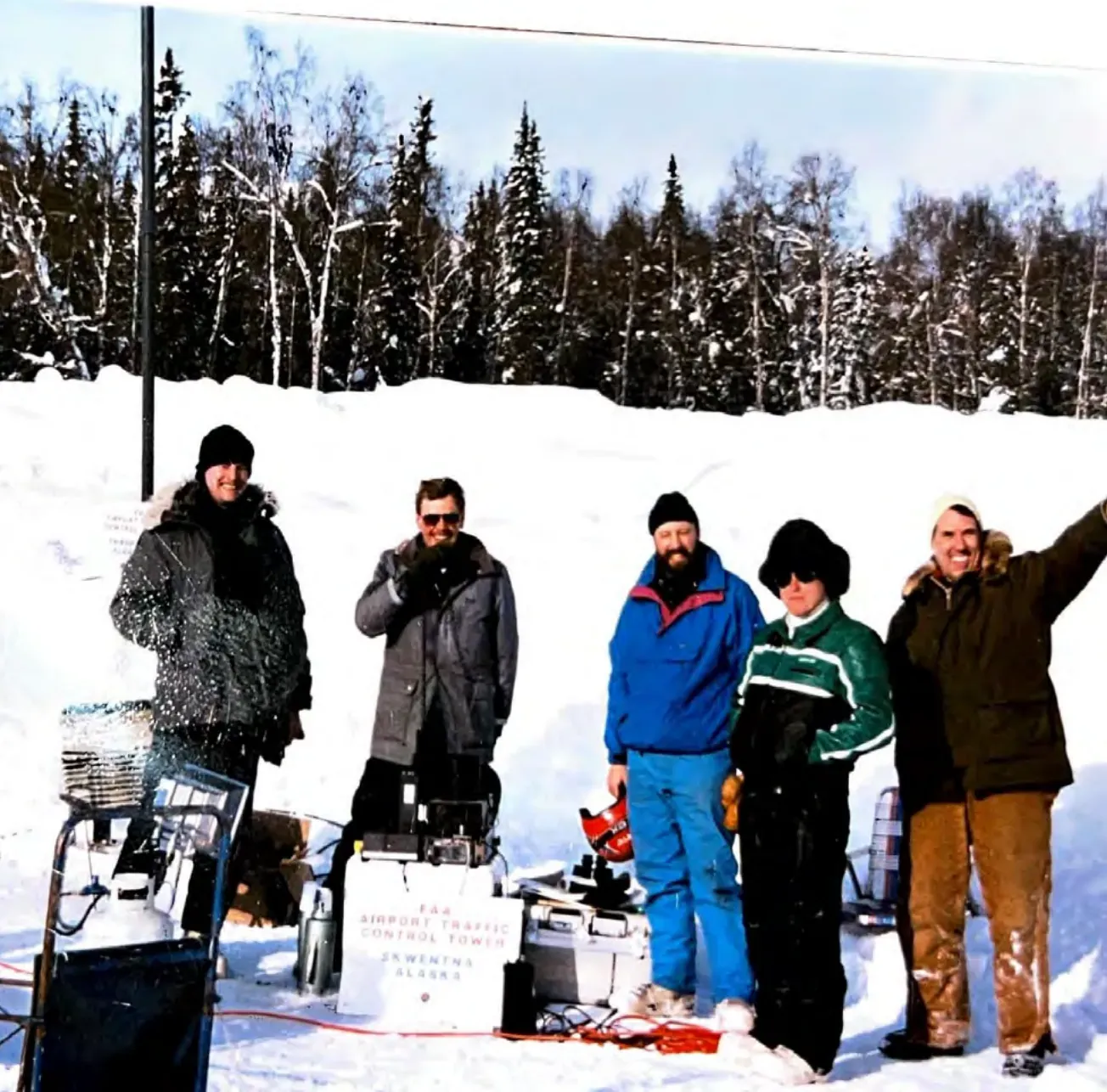
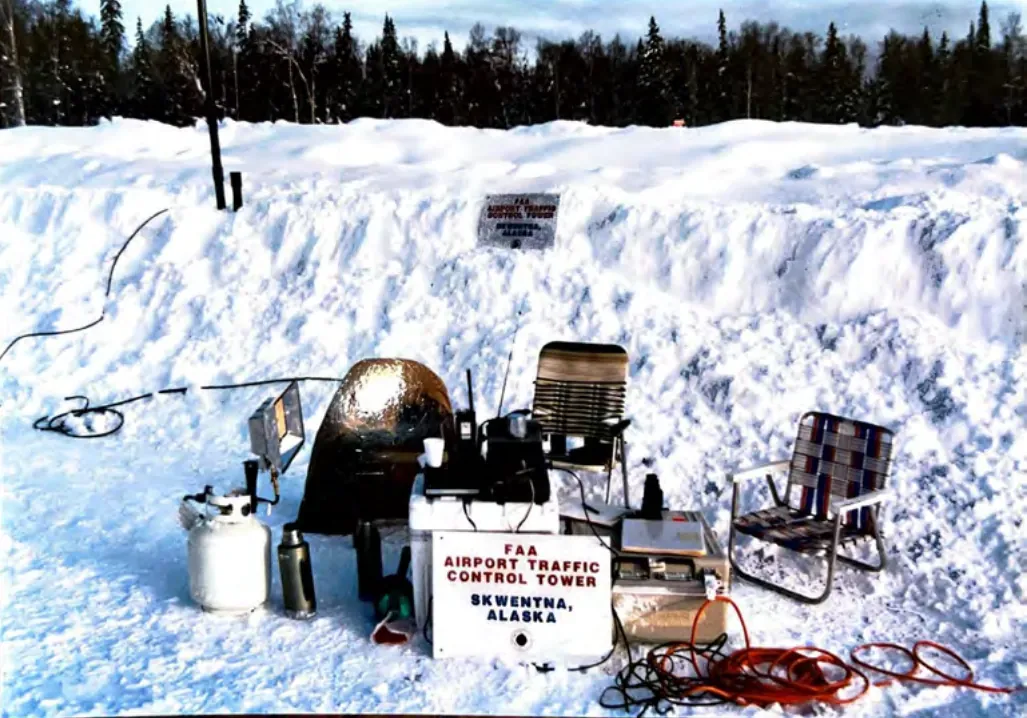
The morning of February 29 arrived with blue skies and below-zero temperatures. The two controllers loaded the equipment on the sled and headed to the runway where they created an almost beach-like scene in the snow: Along the runway and next to 15-foot snowbanks, Hall and Little sunk the antenna deep in the snow. With radios assembled and the generator and heater started, the controllers were ready to sit back in lawn chairs, enjoy the morning, and work airplanes. When the wind picked up and created windchill factors in excess of -30 degrees Fahrenheit, Don Hall used his survival knife to cut blocks of snow for a windbreak.
Busy times
During its three-day life span, the tower recorded over 200 operations. At times the ramp area was completely filled, and the overflow had to park elsewhere. Ski planes had a hard time turning when the wind was up, and the absence of taxiways to the ramp increased time on the runway and complexity for the two controllers. The controllers also had to keep a watchfuleyeontherunway for stray cross-country skiers, snow machines, moose, and dogs.
Pilots came by the “facility” to say “hi” and “thanks for the service,” and the news media visited for pictures and interviews. A local station filmed a short TV segment with the controllers for the nightly news.
Raymie Redington, the first of 76 mushers into Skwentna, won a new Dodge truck for the feat. Over the next few hours, scores of teams reached the frozen river, bedded down on straw, and took food and rest before continuing down the remaining 900 miles of trail to Nome.
One musher who passed through the checkpoint was Stephen Christon, a controller from Anchorage Air Route Traffic Control Center. It was his first year in the race and the first time an FAAer has competed.
Where to next?
After three days, traffic began to slow as the teams departed Skwentna. The “Iditarod airforce” moved on to the next checkpoint. Little and Hall packed their equipment and headed back to Anchorage. The weather, which had gotten progressively colder, stayed clear, so their return trip was faster.
Followingahotshowerandahome-cooked meal, the controllers were again ready to work airplanes wherever needed. In the “last frontier,” who can guess the location of the next temporary airport traffic control tower? That’s why someone suggested borrowing from the title of an old TV western and make the controllers’ theme “Have headset, will travel.”
Ray Ballantyne is a planning specialist in the Alaskan Region’s System Requirements Branch, AAL-518.
More photos
 (opens a larger view)
 (opens a larger view)
 (opens a larger view)
 (opens a larger view)